

What Is a Material Management System and How Does It Work?
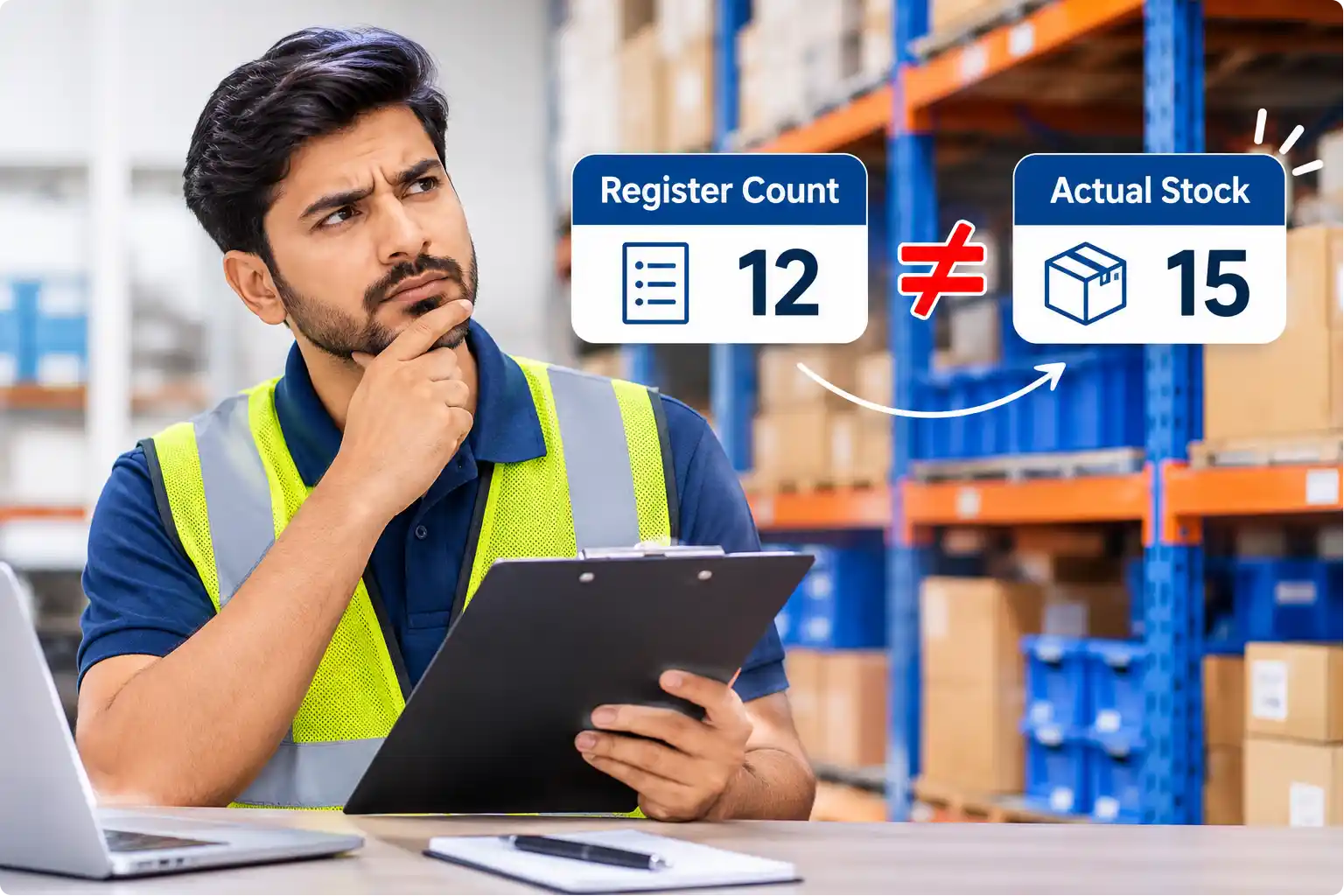
Ask a storekeeper how many 12 mm valves are on the rack and you’ll usually get two answers. One is the number in the register. The other is the number he’d actually bet on. They’re rarely the same.
That gap isn’t laziness. Stores teams juggle issuing parts, chasing vendors and writing gate passes, often within the same ten minutes. Updating the register is the first thing to slip. A few weeks later the paperwork says one thing, the shelf says another, and nobody can say when they drifted apart.
A material management system closes that gap by recording movement as it happens, not afterwards. This guide covers what it is, what it does, what a normal day looks like with one in place, and what to check before buying material management software in India. We’ve set these up in factories, construction sites, pharma units and warehouses, so most of what follows comes from what we see on site.
What Is a Material Management System?
It’s software that follows every item your facility handles, from the day it’s ordered to the day it’s used up, sent out or returned. Raw material, consumables, spares, tools, scrap, finished goods. Each one gets a record showing where it came from, where it sits now, who touched it last, and whether it’s due back.
A spreadsheet can hold the same columns, so what’s different? Enforcement. A spreadsheet only knows what somebody remembered to type. In a proper system, an item can’t be issued without a request, and a vehicle can’t leave without a valid gate pass. The record builds as the work gets done, not from memory afterwards.
It also keeps following the item once it leaves the shelf. Material spends a lot of time in transit, at a vendor, or on the production floor, and the system tracks it there too.
What Are the Key Functions of Material Management?
Five jobs sit under this heading, and they depend on each other.
- Procurement records Order 500, receive 470, and the system holds the purchase order, the receipt and the shortfall together. You see it that day, not when the invoice arrives.
- Stock control Balances for each store and rack, and how quickly they’re falling. People usually picture only this part.
- Movement control Every transfer, issue and outward pass shows who moved what, when, why, and who approved it. When something goes missing, this trail is where the investigation starts.
- Material resource management Planning future purchases from actual consumption instead of gut feel. This cuts both stock-outs and shelves full of “just in case” material.
- Reporting Pending returns, slow-moving items, vendor delivery history, gate pass logs. Auditors ask for these, usually at the worst moment.
How Is Material Management Different From Inventory Management?
Inventory management answers one question: how much of this do we have right now? Material management asks the longer set. Why did we buy it? Did the full quantity arrive? Who took it? Did it come back? Where’s the paperwork? Stock counting is one part of that wider job.
Here’s a quick test for your own site. Can you list every tool currently with an outside vendor and overdue by more than a week, without phoning the stores in-charge? If not, you’re counting stock but not managing material. Plenty of plants run this way for years, until the first expensive tool disappears.
How Does a Material Management System Work?
The material management process is easiest to follow through an ordinary shift.
A supplier’s truck pulls in with a challan. Stores checks it against the purchase order, notes quantity and condition, and raises a Goods Receipt Note. Stock goes up straight away and the PO shows as received, or part received.
The goods go onto a rack, and the rack location is logged. It sounds trivial until someone needs the part at night and the only person who knew where it was has gone home.
Later, maintenance needs a valve. They raise a request, a supervisor approves it, and stores issues against it. Stock drops, and the issue is tied to that job.
Now say a mould has to go out for repair. The system creates a Returnable Gate Pass (RGP) with a due date. Scrap going to a dealer gets a Non-Returnable Gate Pass (NRGP). Security checks the pass before the vehicle moves, so nothing leaves on a verbal okay.
The RGP due date then does its quiet work. A reminder goes out as it approaches. If it passes, the mould lands on an overdue list that same week and somebody makes a call. Without that, a loss usually surfaces only when the item is needed again and can’t be found.
Every one of these steps feeds the reports automatically.
How Does Material Management Software Improve Inventory Control?
Most stock errors don’t come from carelessness. They come from delay.
Picture it. Something is issued on a Tuesday and never logged, or a receipt is booked against
the wrong PO. Nobody notices. At month-end the count is off, and someone has to work out
which of a thousand movements caused it. They usually can’t, so the number gets adjusted and
the cause stays hidden.
Material management software removes the delay. Movements are recorded when they happen, so a mismatch points to one entry and one person within minutes. Counts become quick confirmations instead of detective work.
You get early warnings too. When a fast-moving item falls below its minimum, the system flags it before production feels it. That alone prevents a lot of “we’ve run out, send someone to buy it today” mornings.
How Does a Material Management System Reduce Material Wastage?
Waste usually comes from four places.
Over-ordering: a buyer who can’t see live stock plays safe and orders again, tying up cash in items that sit for months. Shelf life: adhesives, chemicals and rubber parts expire while older stock sits behind newer. Tools: they drift off between shifts with nothing recorded. Duplication: two departments order the same item without knowing.
The system deals with each one. Live balances show before an order goes out. Oldest-first issuing keeps expiry dates from catching you out. Every outward item carries a return date. Overlapping requests get flagged.
Each fix is small. Over a year they add up to the difference between a store that costs money and one that saves it.
What Are the Benefits of Automated Material Management?
That depends on who you ask.
Supervisors stop sending someone to stores just to check availability, because they can look at a screen. Requests get approved properly instead of by a shout across the floor.
Stores staff stop copying the same entry into three registers at the end of the day. Receipts, issues and returns post themselves, which leaves time for keeping the store in order.
Purchase teams see how vendors behave: who delivers late, who ships short, whose material gets rejected. That’s useful in rate negotiations and impossible to remember accurately.
For the plant head, the gain is confidence. When an auditor asks what left the plant last quarter and hasn’t come back, you open a report instead of spending an afternoon calling vendors.
Why Is Material Management Important in Manufacturing Industries?
A line stops the moment a key material is missing, and everything after it slips: dispatch, invoicing, customer patience. The loss isn’t only the part. It’s idle machines, operators waiting, and a delivery date you now have to renegotiate.
Traceability matters just as much. Buyers increasingly ask which batch of material went into which product, and who handled it. Answering from paper is slow and shaky. Answering from a system is quick and defensible, and sometimes it decides whether you keep the account.
Can Material Management Software Track Movement Between Departments?
Yes, and this is where plants quietly lose the most, because there’s no guard inside the premises the way there is at the main gate.
Say R&D borrows a batch from the machine shop. The machine shop thinks it’s a loan due back Friday. R&D thinks it’s a transfer and has already used half. Both ledgers are now wrong, and both teams are certain they’re right.
With a system, the sender raises the transfer, the receiver confirms it, and both balances change together with the reason attached. The argument never starts because the record shows what was agreed. Over time you also spot patterns, like a department drawing more than planned. Paper never reveals these because nobody adds up a hundred small slips.
How to Choose Material Management Software in India
Brochures all sound alike, so test with questions. These come from what we see across manufacturing, construction, pharma and logistics sites. Any material management system in India you shortlist should pass them.
-
Does it cover the whole journey?
If a gate pass can be created without digital sign-off, the control is cosmetic. -
Are approvals enforced?
Expensive proprietary scanners slow down rollout. -
How fast can you start?
Can your existing item list be imported quickly? A plant can’t stop for a month to configure software. -
Are the reports ready?
Pending RGPs and stock movement should come out of the box, not be something you build yourself.
Whatever you shortlist, try it with your own data and ask for a live walkthrough first.
Why Choose MLAI Solution?
MLAI Solution builds software around how plants and facilities actually run: approvals, gate passes, OTP checks at the gate, and reports that don’t need rebuilding every month. Our Material Management System covers the cycle from receipt to return, with RGP and NRGP tracking and MIS reports built in.
Material control works best when the rest of site operations are organised alongside it. That’s why our products are designed to work together:
- Work Permit Software for contractor jobs and safety approvals
- Employee Gatepass System for staff movement
- Visitor Management System for vendors, delivery staff and guests
- Guard Patrolling System for verified security rounds
- Courier Service Management for parcels and documents
You don’t need to roll everything out at once. Start with one store, see how the passes and reports perform, and widen from there.
Frequently Asked Questions
Got questions? We have answers. Here's everything you need to know about MLAI Solution and our products.
Conclusion
Most material problems in a plant aren’t dramatic. They’re slow, quiet leaks between the paperwork and the rack. A material management system seals them by making every movement visible, approved and traceable from receipt to return.
If your facility still runs on registers and spreadsheets, you don’t have to change everything overnight. Begin with one store and build from there. MLAI Solution develops material and facility management software for manufacturing, construction, pharma and logistics companies. Book a free demo to see how it handles your own data.